

After nearly four years, we are winding down the Policy Leadership Initiative.
The initiative emerged from a tension I had experienced over more than a decade working on digital policy in Brussels: those most impacted by tech-facilitated harms are too often absent from the rooms where decisions are made.
Across digital policy conversations, from AI to platform accountability, privacy, data protection, market power, and digital sovereignty, similar dynamics repeated themselves. In Brussels and other policy hubs, the same forms of privilege shape who participates and how.
The program emerged from a common set of challenges many working in this space have long identified: the digital policy space would benefit from broader participation, stronger support infrastructure, and leadership shaped by principles of decolonisation, feminism, justice, and care.
This thinking was informed by broader movements across the field, including efforts to “burst the digital rights bubble,” such as the Decolonising the Digital Rights Field project shepherded by EDRi and DFF, which has since evolved into Weaving Liberation.
To lay the groundwork for this initiative, we spoke with over 100 policy practitioners, policymakers, and civil society leaders across Europe and globally, and many of the same themes surfaced repeatedly.
The word “leadership” carries significant baggage, often implying that leaders are those who are most visible, loudest, and most authoritative. In reality, what we heard was something more distributed; leadership as enabling others, sustaining collective work, and driving change through care, trust, and shared responsibility.
Challenges practitioners experience in policy spaces are systemic rather than individual. People often already possessed deep expertise, but lacked familiarity with the informal norms and “codes” of policymaking environments like Brussels. Confidence in these spaces was shaped less by competence than by access, networks, and proximity to power.
Burnout is endemic in our space. Policy work often rewards constant responsiveness, visibility, and performance, while leaving little room for reflection, care, or long-term strategic thinking. Particularly for those navigating structural barriers or working across movements with limited resources, sustaining engagement in these spaces could feel extractive, at times unsafe, and exhausting.
Digital policy is never only about technical expertise. Influence is shaped by relationships, confidence, institutional legitimacy, language, class, geography, and networks that are often invisible to those already inside them. Building more equitable policy ecosystems therefore requires more than opening doors; it requires transforming the norms, incentives, and concentrations of power that determine who is heard in the first place.
With these insights, together with our esteemed Advisory Group, we developed a program that combined Policy Leadership cohorts, mentoring relationships, and in-person and virtual convenings designed to strengthen relationships, share policy knowledge, and support collective strategising across movements, organisations, and regions.
What we accomplished together
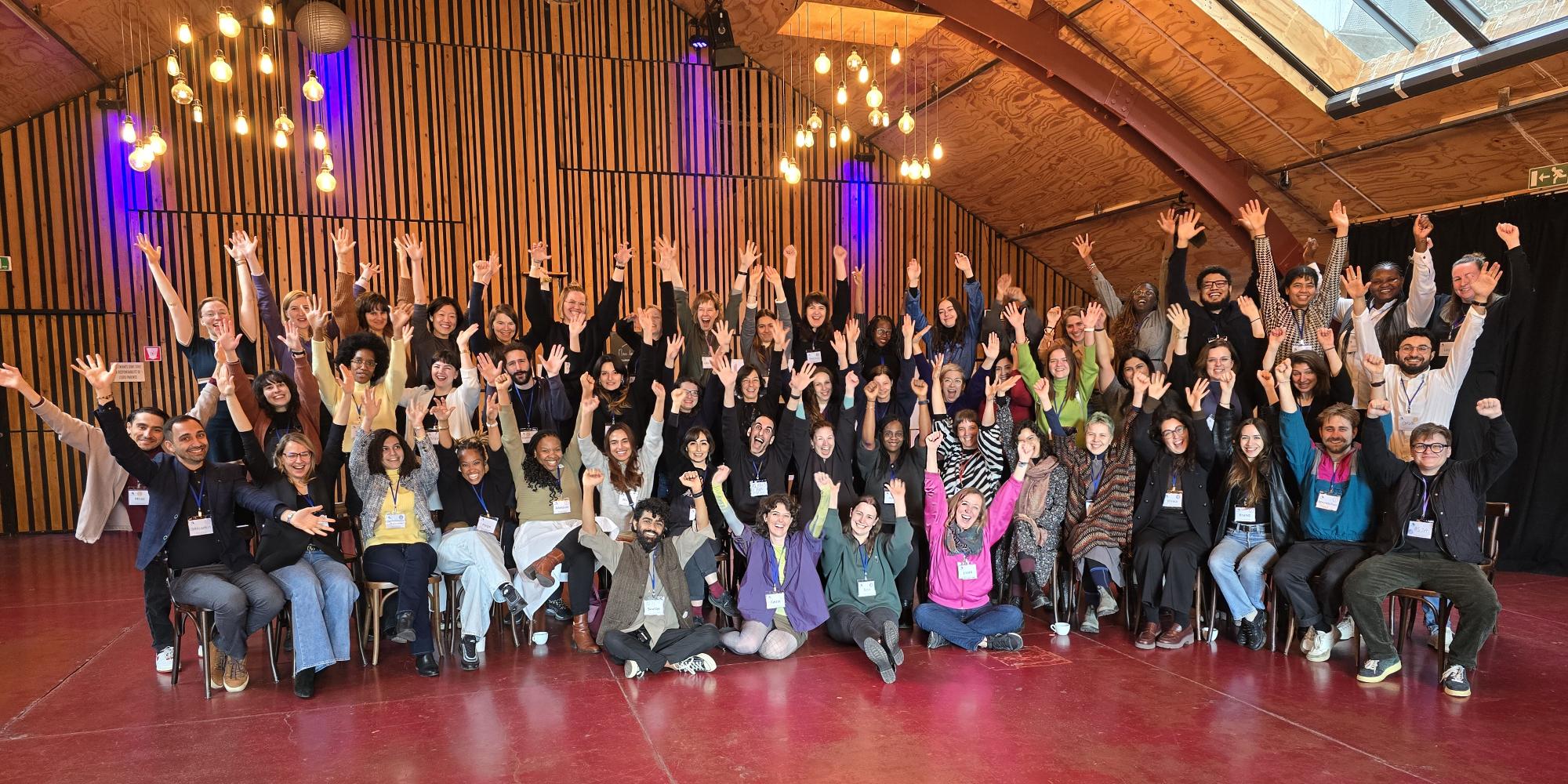
Over time, this work took shape through 12 cohorts, including a dedicated AI Openness and Equity cohort, two in-person Policy Leadership Summits (in 2023 and 2024), and dozens of mentoring relationships connecting practitioners across different stages of their work.
Across this work, the initiative supported a diverse group of emerging and established practitioners, the majority of whom identify as women and people from historically underrepresented backgrounds. Participants came from movements and communities including Roma rights, migrant justice, disability justice, labour organising, journalism, climate justice, and digital rights. Many were based outside Brussels, originating from the Global Majority, or came to digital policy work through nontraditional pathways, bringing perspectives and expertise underrepresented in European digital policy spaces.
Across cohorts, mentoring relationships, and convenings, we explored much of the tacit and implied knowledge that shapes policy work; the kinds of insights practitioners often learn informally over time. This included questions such as:
-
How to navigate policy environments with confidence and creativity
-
Building lasting relationships without reproducing harmful dynamics
-
Sharpening advocacy, public speaking, and negotiation skills
-
Advancing radical policy positions and strategies within reformist institutions
-
Sustaining ourselves and each other while navigating urgency, precarity, and institutional pressure.
Participant testimonials consistently underscored how these spaces evolved into a genuine community of practice, where knowledge and expertise were generously exchanged and relationships lasted far beyond the cohorts themselves.
Many participants went on to shape digital policy debates within EU institutions, strengthen policy capacity within civil society organisations, move into more policy-focused roles, and deepen advocacy efforts on issues ranging from platform accountability and AI policy to migrant justice.
Some of these collaborations became durable structures in their own right. For example, conversations initiated during the first Policy Leadership Summit later developed into the Language Inclusion Network for Global Understanding and Advocacy (LINGUA), a diverse group of practitioners working on language justice in digital spaces.
Across the AI Openness and Equity cohort, participants collectively developed and refined alternative framings of AI openness, digital sovereignty, and public interest technology, challenging dominant narratives in AI-related policy debates.
In 2026, together with partners including Mozilla Foundation, Open Future, and Access Now, we convened a series of strategy discussions on public interest visions for digital sovereignty and how civil society can advance equitable, rights-based digital policy in an increasingly challenging environment. These conversations examined questions around de-centering legislative advocacy, engaging in (while also contesting) AI industrial policy, visions for public interest technology, and movement strategy, and formed part of a broader set of parallel conversations continuing to emerge across the field.
We are encouraged to see these conversations continuing to evolve across civil society organisations and hope the relationships, questions, and approaches that emerged through this work continue to contribute to a more equitable and people-centred approach to our collective work.
Key takeaways
There were many lessons, reflections, and insights that emerged throughout the course of this initiative. A few that feel particularly notable to highlight are:
Support infrastructure is political infrastructure. Trusted peer relationships, mentorship, honest conversations about power and precarity, and environments where people can reflect without feeling the need to perform remain far too rare within policy spaces. Yet these forms of support are essential to sustaining meaningful participation, particularly for practitioners navigating structural barriers, isolation, burnout, and extractive policy environments.
(Digital) policy work requires constantly navigating institutional contradiction. Across cohorts and convenings, practitioners repeatedly grappled with how to engage institutions without becoming absorbed by them; how to pursue meaningful reforms while recognising the structural limitations of existing systems; and how to hold space for both pragmatic and more transformative approaches. These tensions are enduring features of policy work and benefit from collective reflection.
Breaking silos and strengthening solidarity across movements matters. Throughout the initiative, there was growing recognition that struggles around technology, economic power, democracy, labour, migration, climate, and justice are deeply interconnected. In a context shaped by funding precarity, deregulation, the mainstreaming of far-right politics, and the growing securitisation and militarisation of technology policy, stronger exchange and alignment across movements helped reduce isolation, deepen collective analysis, and open space for more coordinated approaches.
Moving forward: the work continues
One thing remained consistently clear throughout this work: efforts to build more equitable, supportive, and justice-oriented policy spaces remain deeply necessary. Policymaking environments like the “Brussels Bubble” continue to be shaped by unequal access to power, privilege, networks, and resources, while many of the structural barriers practitioners navigate persist both within institutions and across civil society spaces themselves. Creating opportunities for reflection, solidarity, mentorship, and collective learning therefore remains important not only for participation, but for sustaining more meaningful and equitable engagement in digital policy over time.
We hope the initiative has contributed, in some small way, to a broader shift in how leadership is understood in digital policy. Not as individual authority or visibility, but as collective stewardship, power sharing, and creating the conditions for others to participate and lead.
This work was shaped by an extraordinary community of participants, advisors, collaborators, mentors, facilitators, organisers, and institutional partners. We are grateful to our funding partners, the Ford Foundation and Mozilla, and to Aspiration for hosting and supporting this initiative.
Deep and sincere appreciation goes to everyone who contributed their time, care, experience, and trust to this work, and helped build spaces rooted in curiosity, courage, solidarity, and collective learning. We are grateful for the care, trust, and sustained engagement that made it possible over time. Many of the relationships, questions, and collaborations that emerged continue beyond the initiative itself and remain part of ongoing work across the field(s).
*Photo from our second Policy Leadership Summit, 2024 in Brussels